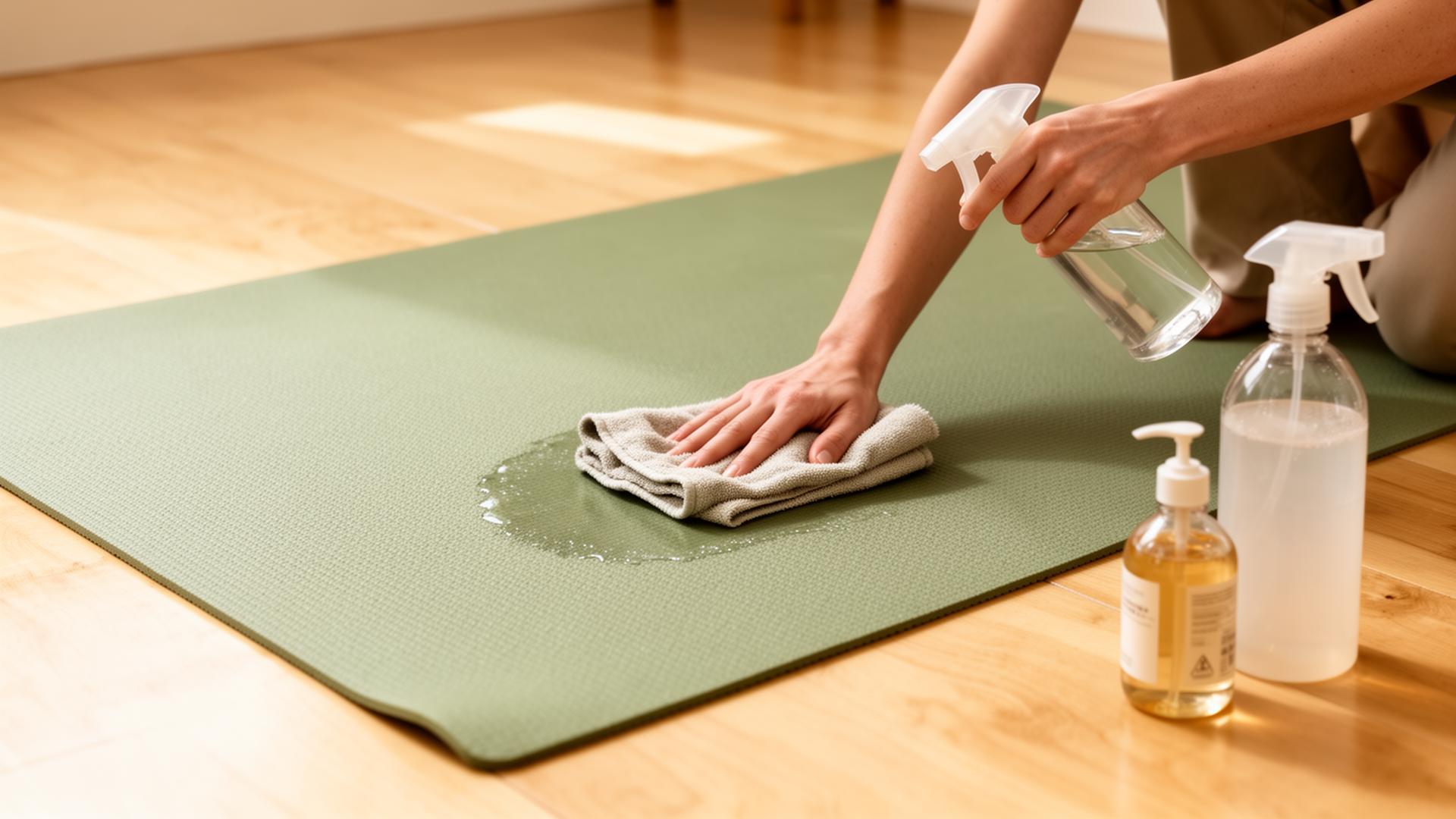
A yoga mat goes through a lot: hands, feet, sweat, and the occasional dusty floor. A quick, gentle wipe after practice can help remove everyday grime and keep your mat feeling ready for your next session.
You don't need a complicated formula or a cabinet full of specialty products. You can make a simple homemade yoga mat spray with a few basic ingredients—but the safest cleaner depends on what your mat is made of.
Before mixing anything, check the care instructions from your mat's manufacturer. Some materials can be damaged by vinegar, essential oils, alcohol, or too much moisture. If the manufacturer recommends only a damp cloth or mild soap and water, follow that guidance instead.
Affiliate disclosure: This article contains Amazon affiliate links. If you purchase through these links, Tricks N’ Treats may earn a commission at no additional cost to you.
A Simple DIY Yoga Mat Cleaner Recipe
For mats whose care instructions allow a diluted spray, this is a simple option.
Ingredients
- 1 cup distilled water
- ¼ cup alcohol-free witch hazel or white vinegar (choose only the option approved for your mat)
- A clean spray bottle
Essential oils are optional, not necessary. For the most mat-friendly, low-residue option, leave them out. Oils can leave a film, affect grip, or irritate sensitive skin, and some mat makers advise against them.
Important: This is a surface-cleaning spray, not a disinfectant. Vinegar and essential oils should not be relied on to kill germs.
How to Make the Spray
- Wash and thoroughly rinse the spray bottle if it has been used before.
- Pour in the distilled water.
- Add the witch hazel or vinegar only if your mat's care instructions permit it.
- Close the bottle and gently swirl to combine.
- Label the bottle with the ingredients and the date you made it.
Make a small batch and prepare a fresh one when needed. A water-based homemade mixture has no tested preservative system, so don't store it indefinitely.
How to Clean Your Yoga Mat
A light touch is usually best. Avoid soaking the mat or saturating seams and edges.
- Check the care label. Confirm which cleaners and methods are suitable for your mat's material.
- Test first. Apply a little of the approved solution to a small, hidden area and let it dry. Check for changes in color, texture, or grip.
- Spray the cloth, not the mat. Lightly dampen a soft microfiber cloth with the cleaner.
- Wipe gently. Clean the surface without scrubbing aggressively or leaving puddles.
- Remove residue if needed. Follow the manufacturer's instructions; some mats may need a separate wipe with a clean, water-damp cloth.
- Air-dry completely. Lay the mat flat or hang it as directed. Don't roll it up while damp.
For a routine refresh, a soft cloth lightly dampened with water may be all your mat needs. If it needs a deeper clean, use only a method the manufacturer specifically allows.
What to Avoid When Cleaning a Yoga Mat
Yoga mats aren't all made from the same material. Natural rubber, PVC, TPE, polyurethane, and cork can react differently to cleaning ingredients.
- Don't assume vinegar is safe. Some manufacturers advise against acidic cleaners, especially on certain natural-rubber mats.
- Use essential oils sparingly—or skip them. They can leave residue and may affect the mat's surface or grip.
- Avoid harsh household cleaners. Bleach, ammonia, solvents, and abrasive scrubbers are not good default choices.
- Don't use too much liquid. Excess moisture can be difficult to remove from porous materials.
- Don't leave the mat in direct sun for extended periods. Heat and prolonged UV exposure can degrade some materials.
- Never mix cleaning products. In particular, never mix vinegar with bleach or other cleaners.
If your mat has a strong odor, visible buildup, or a stain that won't come off, check the manufacturer's deep-cleaning instructions rather than increasing the strength of your homemade mixture.
Helpful Supplies for a Simple Mat-Care Routine
You may already have what you need at home. If not, these are a few useful basics. Choose products that suit your mat and avoid adding unnecessary fragrance or oils.
- Reusable fine-mist spray bottles — helpful for preparing a small batch of cleaner.
- Soft microfiber cleaning cloths — useful for wiping without abrasive scrubbing.
- Distilled water — a simple base for a diluted spray.
- Alcohol-free witch hazel — an option only when permitted by your mat's care instructions.
These are affiliate links. Product availability and formulations can change, so check the product details before purchasing.
How Often Should You Clean Your Yoga Mat?
For everyday home practice, wipe away visible sweat and dirt after use and let the mat dry before storing it. If you attend a hot-yoga class, share a mat, or practice frequently, you may need to clean it more often.
There isn't one schedule that works for every mat. Follow the manufacturer's guidance and avoid over-cleaning, which can wear down some finishes.
A Fresh Mat, Without the Fuss
A simple cleaning routine can help your yoga space feel more inviting. Start with your mat's care instructions, use the gentlest approved method, wipe rather than soak, and let it dry completely before rolling it up.
A little regular care goes a long way—and the best cleaner is the one that keeps your mat clean without compromising its material or grip.